Micro Climate
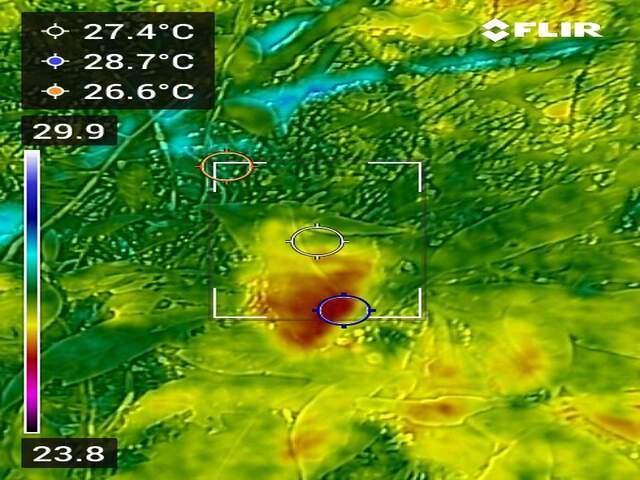
Weaver ants prefer to build their nests in environments with a high relative humidity, ranging from a daily minimum of 54% to a maximum of 94%.
L o a d i n g
colony
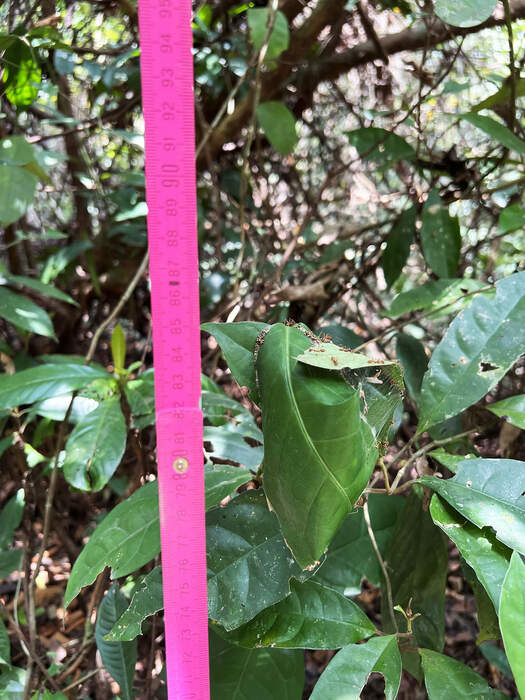
0.000108 m3
at 0.85 m
6.75ºN
L01 [folded] cantilever
leaves
mixed
mixed
invertebrates
L01 [folded] cantilever
L01 [folded] cantilever
L01 [folded] cantilever
L01 [folded] cantilever
L01 [folded] cantilever
L01 [folded] cantilever
L01 [folded] cantilever
L01 [folded] cantilever
L01 [folded] cantilever
L01 [folded] cantilever
L01 [folded] cantilever
L01 [folded] cantilever
L01 [folded] cantilever
L01 [folded] cantilever
colony
0.000108 m3
at 0.85 m
6.75ºN
leaves
mixed
mixed
invertebrates
Liberia
Robertsport Shipwreck Trail
6.7499°N, 11.3667°W
08/04/2024, 11:46 am
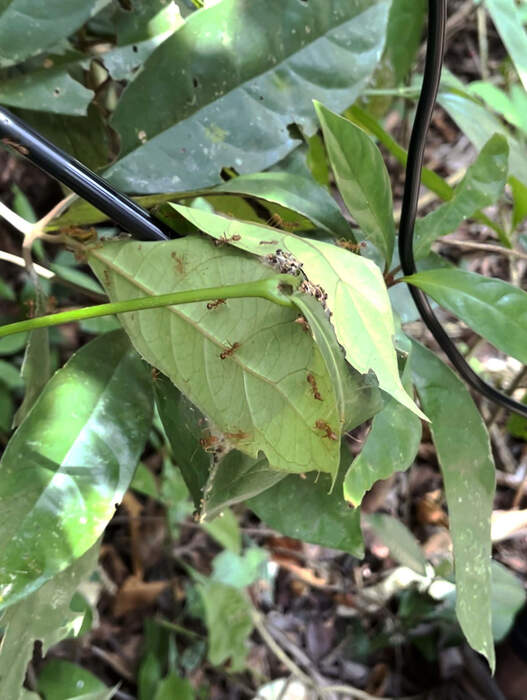
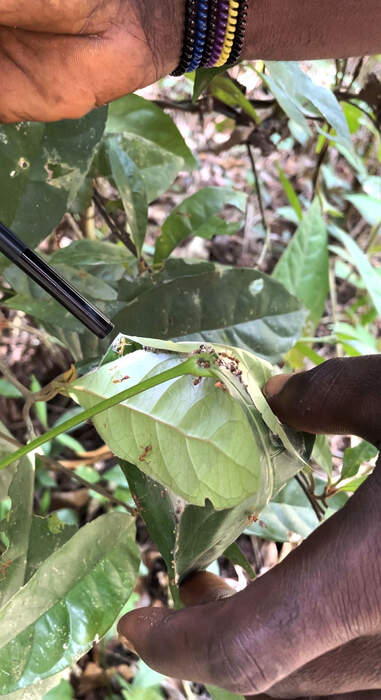
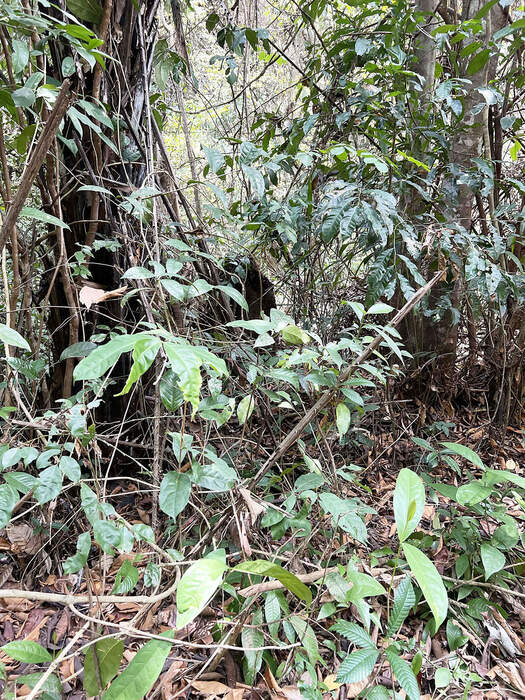
Weaver ants are remarkable architects of nature, weaving their way into the fabric of life in the forests of Robertsport. These industrious colonies scout, forage and construct until they mature, producing future queens. In doing so, they create intricate stories of coexistence and survival among the surrounding wildlife. Discovered on the trail in Liberia, this habitat reveals the balance of nature's interwoven relationships, documented with the help of Armstrong.

Weaver ants prefer to build their nests in environments with a high relative humidity, ranging from a daily minimum of 54% to a maximum of 94%.

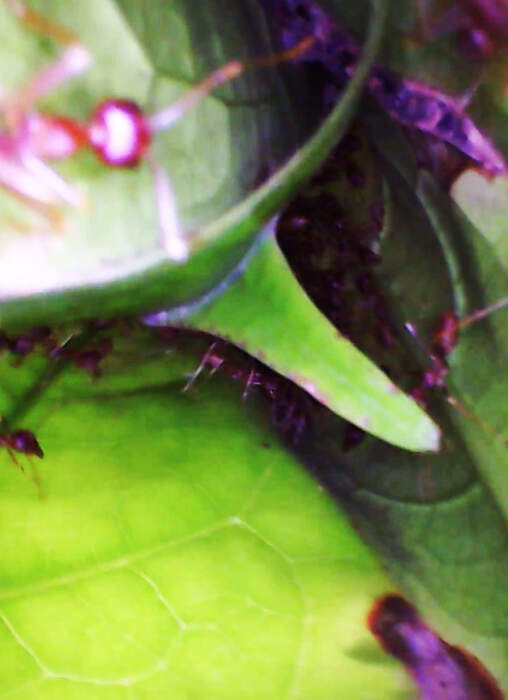
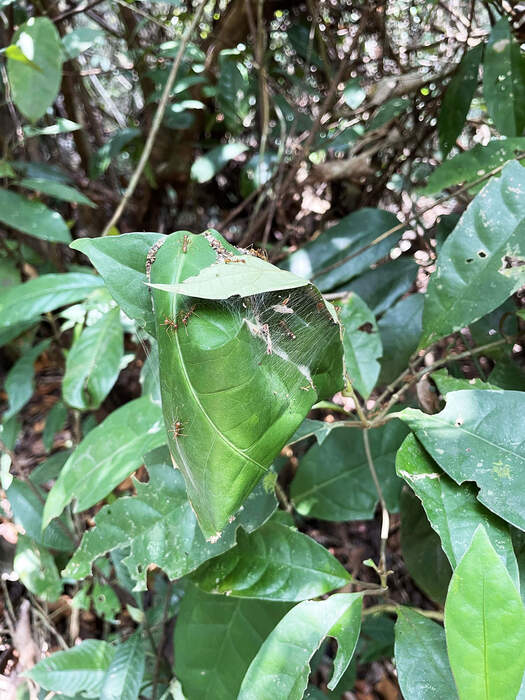
Weaver ants construct their nests by using silk to stitch leaves together. Intriguingly, only the larvae produce this silk, so workers carry them in their jaws, using them as living tools. Although these nests are robust and water-resistant, the colony continually builds new ones, ensuring their survival and expansion.
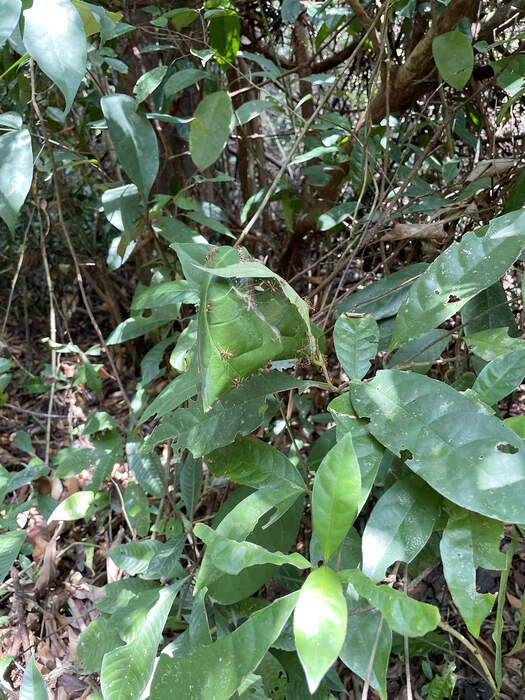
Weaver ants are arboreal, nesting in tree foliage across tropical regions of Asia, Australia and Africa. Their colonies can be immense, with over a hundred nests spread across numerous trees, housing more than half a million workers. Known for their territorial nature, these ants aggressively defend their domain from intruders.
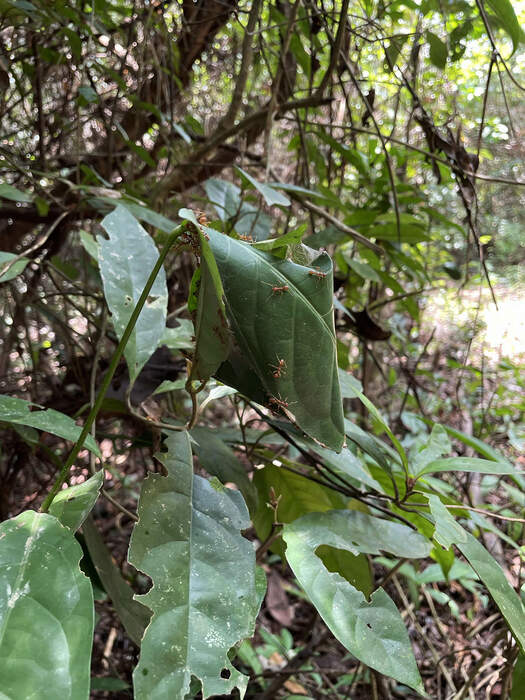
Weaver ants exemplify cooperative behavior during their nest-building process. They sew together living leaves, using their larvae as shuttles to glue the leaves with silk. The process begins with workers pulling leaf edges together. For larger gaps, they form chains by grasping one another to bridge the space. Once leaves are aligned, workers retrieve larvae, tapping their heads to excrete silk, which binds the leaves. These nests, typically elliptical, can range in size from small to over half a meter long, often constructed within a day.